Chlordiazepoxide example alcohol detoxification regime
Last reviewed dd mmm yyyy. Last edited dd mmm yyyy
There are a number of detoxification regimes and most have been devised locally from experience.
It is important to identify a regime that you are confident works for you and your patients though all regimes should be flexible. The dose should be tailored to the person's age, gender and level of drinking prior to detox and adjusted during the detox dependent upon symptoms, ideally using a validated withdrawal symptoms assessment tool such as Alcohol Withdrawal Assessment Scoring Guidelines (CIWA-Ar) (1).
- doses and the length of detoxification will vary dependent upon the patient
- first line treatment for the management of assisted withdrawals from alcohol is chlordiazepoxide. The use of chlordiazepoxide and diazepam have the strongest evidence base in the management of detoxification. Sodium valproate or phenytion may also reduce or stop severe withdrawal symptoms during detoxification
- detoxification programme using chlordiazepoxide:
- titrate against the amount of alcohol the patient is using and the severity of the withdrawals they are experiencing
- regime needs to fit individual need and symptoms
- Severity of Alcohol Dependence Questionnaire (SADQ-C) (2) can be used
- give at least 4 hours between doses
- use capsules rather than tablets (see drug tariff - this is less expensive)
- other medication may occasionally be required for the control of symptoms such as diarrhoea, vomiting and itching
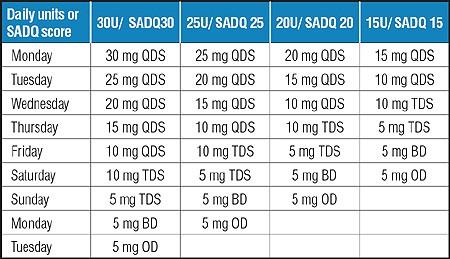
Example treatment regime (from Camden PCT primary care alcohol detox protocol 2008)
Reference:
- 1) www.websterplace.org
- 2) Stockwell, T., Sitharan, T., McGrath, D.& Lang, . (1994). The measurement of alcohol dependence and impaired control in community samples. Addiction, 89, 167-174.
- 3) SMMGP (February 2010). Network;28:12-14.
Related pages
Create an account to add page annotations
Add information to this page that would be handy to have on hand during a consultation, such as a web address or phone number. This information will always be displayed when you visit this page